

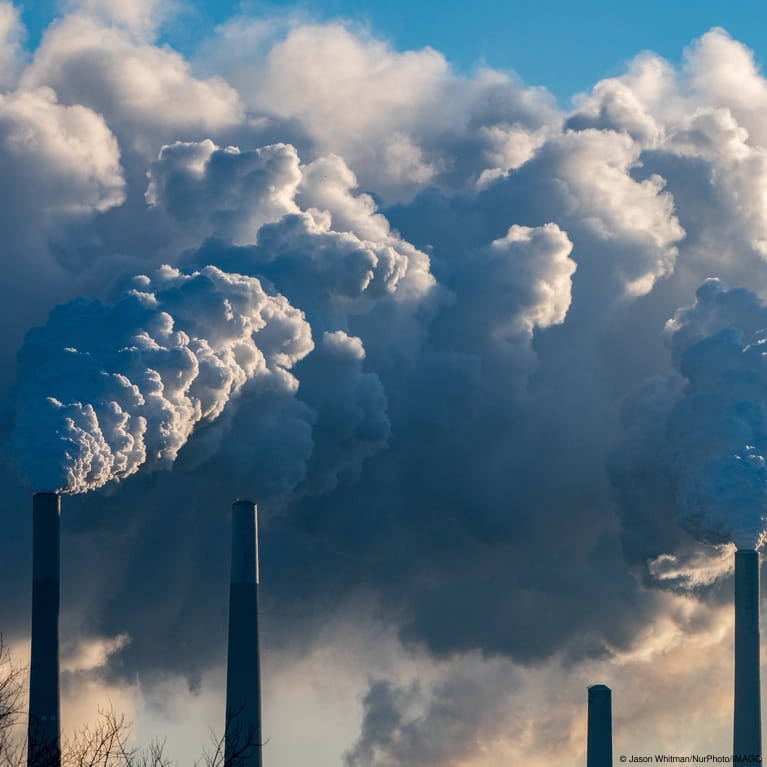
Global carbon emissions from fossil fuels are projected to fall 0.4% in 2026, largely because of disruption to oil supplies and higher energy prices linked to the war involving Iran, according to a new Global Carbon Project assessment. The forecast is a modest decline, not evidence that emissions have entered a lasting downward trend.
The projection puts fossil-fuel CO₂ emissions at about 38.2 billion tonnes. Oil emissions are expected to drop 1.9% and natural gas emissions 0.3%, while coal emissions are forecast to rise 0.6%, the Global Carbon Project said.
Researchers pointed to supply disruption through the Strait of Hormuz and elevated energy prices as major factors behind the oil decline. Glen Peters, a study co-author and scientist at Norway’s CICERO Center for International Climate Research, said the decrease was “a little bit of good news, but for the wrong reasons,” according to DW.
Fossil-fuel decline does not mean total emissions are falling
The report projects that overall global CO₂ emissions will increase by about 1% in 2026. Emissions from land-use changes, including deforestation and peat fires, are expected to rise enough to outweigh the small reduction from fossil-fuel use.
Researchers also said growth in solar and wind power and electric vehicles contributed to the emissions figures, but was not sufficient on its own to produce a larger decline. Pierre Friedlingstein, a co-author with the Global Carbon Budget Office, said the long-term response remained the rapid deployment of clean-energy technologies.
The assessment was released as world leaders gathered in Turkey for the United Nations COP31 climate conference. Peters cautioned that a one-year fall does not establish a peak when it is driven by a temporary shock rather than structural change. Previous annual declines during the 2009 global economic crisis and the 2020 COVID pandemic were followed by increases as economic activity recovered.
 Reid Bentley