

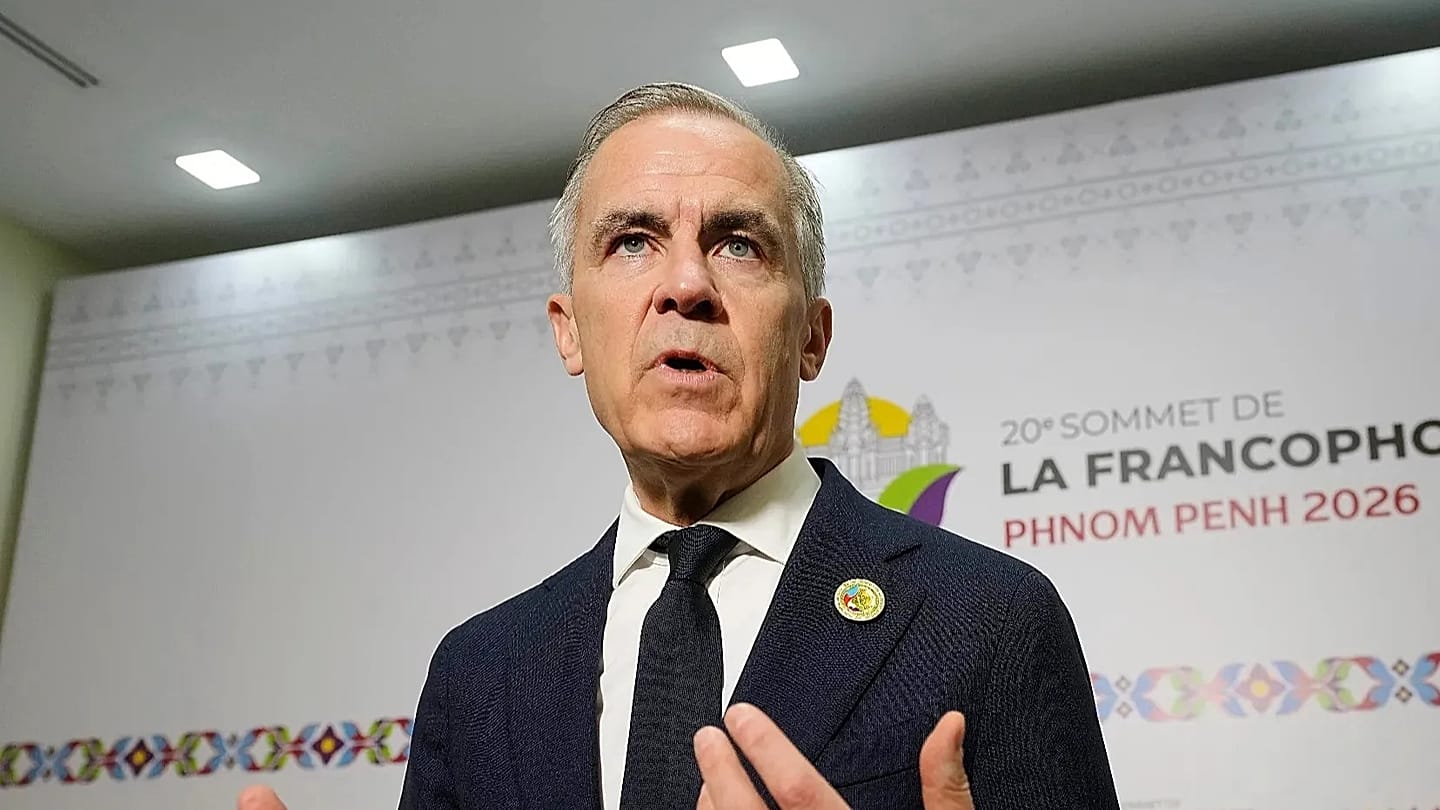
Canada could seek investment from Chinese automakers if trade talks with the United States fail to protect its auto industry, Prime Minister Mark Carney said Monday in Phnom Penh. He said negotiations with Washington remain his priority, but Canada would pursue other options if its factories and workers are not fully used in a North American market.
Carney told reporters at the Francophonie Summit that U.S. trade actions have made the continental auto market less integrated. He described possible outreach to manufacturers in China, Europe or Japan as “action, reaction,” rather than leverage in negotiations with President Donald Trump. The Associated Press also reported his remarks ahead of a planned meeting with Chinese President Xi Jinping in Shenzhen.
Carney sets conditions for any investment
Carney said a Chinese role would need to involve more than vehicle assembly. He called for substantial manufacturing in Canada, proper labour standards and domestic supply chains that expand over time, including the use of Canadian critical minerals in electric vehicles.
Canada and China reached an agreement in January that allows up to 49,000 Chinese electric vehicles a year under a 6.1% tariff, replacing a 100% surcharge for vehicles within the quota. The U.S. Trade Representative describes the quota and tariff terms in its 2026 report on the USMCA auto sector. Beijing also agreed to reduce tariffs on Canadian agricultural goods, including canola.
Carney has said he expects the arrangement to attract investment and create jobs. Ontario Premier Doug Ford criticized the deal, warning it could threaten Canadian jobs and access to the U.S. market.
Canada’s auto industry relies on cross-border production by Ford, General Motors and Stellantis, with parts moving between plants in Canada, the United States and Mexico. Carney said he had discussed trade with Trump and senior U.S. officials and that progress was being made toward a possible agreement, though differences remained. He has said any deal must leave Canada with a viable auto industry.
 Clayton Ward