

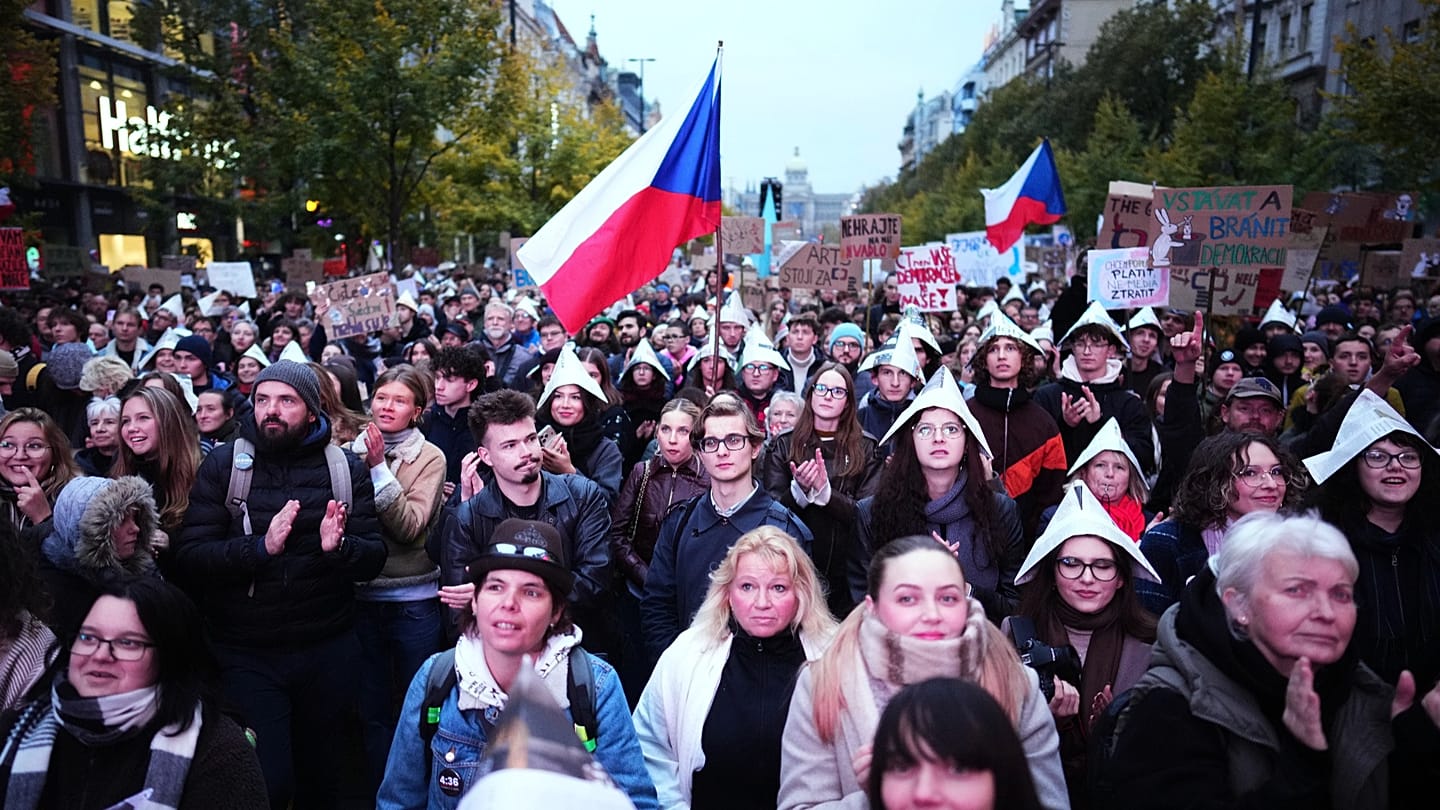
Thousands of people protested across the Czech Republic on November 3 as employees of Czech Television and Czech Radio staged a one-day strike against a proposed overhaul of public media funding. Broadcasters reduced programming, while demonstrators gathered in Prague and other cities.
The government’s bill would replace regular payments from households and businesses with funding from the state budget. Critics say the change could leave public media more vulnerable to political pressure; the government says the plan would not affect editorial independence and argues that broadcasters need to reduce costs.
At Prague’s Wenceslas Square, media workers were joined by students and other demonstrators. Czech Television news editor Michal Kubal called the strike unprecedented in the history of the country’s public-service media. The broadcaster said it would air archived material and shorter news bulletins, while Czech Radio also changed its schedule. The Associated Press reported that thousands gathered in the capital.
Bill remains under consideration
The proposal has not become law. It passed its first reading in the lower house on October 24, and parliamentary consideration was suspended six days later, according to the Czech Chamber of Deputies’ legislative record. The process could resume from December 24.
Prime Minister Andrej Babiš said on October 31 that the government was preparing an alternative based on voluntary payments rather than direct financing from the state budget. That proposal had not been incorporated into the bill at the time of the strike. Babiš also said on Monday that “nobody wants to control public media, let alone nationalise them.”
Under the bill’s proposed funding model, public broadcasters could receive about 15% less than they do under the current system. That is a projected reduction, not a cut already in effect. Broadcaster employees and critics warn it could lead to layoffs and fewer programmes, while a joint statement by media organizations said the model could threaten editorial independence.
 Clayton Ward