

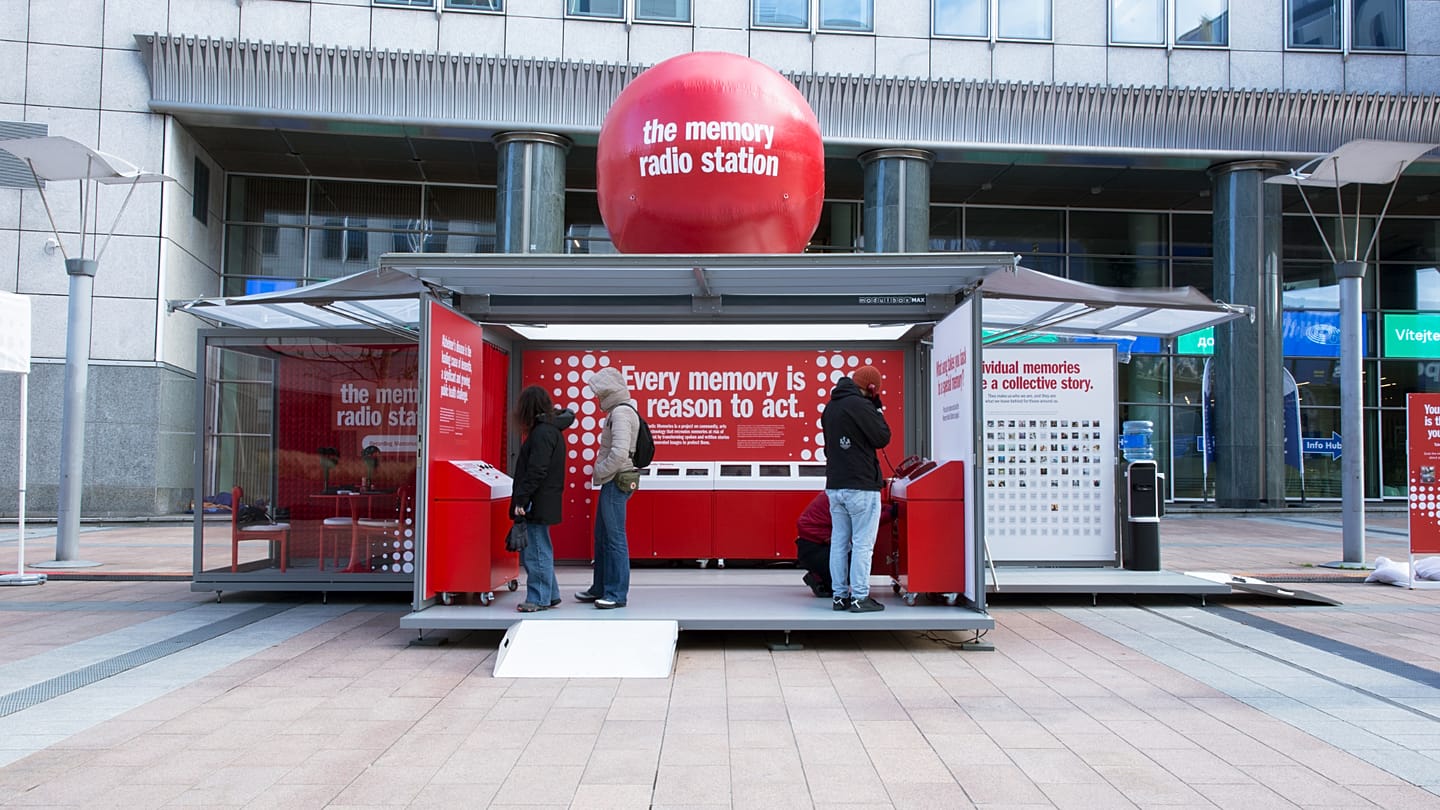
An AI project that turns personal stories into images is bringing conversations about dementia and memory loss to public spaces across Europe. Called Synthetic Memories, it forms part of The Memory Radio Station, a travelling exhibition launched by Eli Lilly in June 2026.
During guided sessions, participants describe experiences from their lives, and generative AI creates visual representations of those accounts. The project is designed to support reminiscence activities, not to treat or cure dementia. Eli Lilly says the exhibition is touring Europe from June to November, inviting the public to share memories whether or not they experience memory loss.
The initiative grew from work by Barcelona-based creative studio Domestic Data Streamers with people living with dementia in care homes. The team worked with social workers and neurotherapists in Spain. Sessions use questions to help participants recall and describe experiences before those accounts are translated into images.
At a Brussels stop in November, Belgian MEP Hilde Vautmans shared memories of going to a cow market in Sint-Truiden with her father, who later stopped recognising her. “That is something that hurts so much you cannot even describe it,” she said, describing the effect of his memory loss. Euronews reported that the exhibition was hosted at the European Parliament.
Dementia affects more than 12 million people in Europe, with the number projected to reach 20 million by 2050. Alzheimer’s disease accounts for an estimated 60% to 80% of cases, according to the figures cited in the report.
Earlier diagnosis can help people access treatment and care while symptoms are milder. Vautmans said her family initially struggled to recognise what was happening, attributing her father’s forgetfulness to stress and overwork. The exhibition aims to make memory loss more visible and encourage reflection on the value of personal stories.