
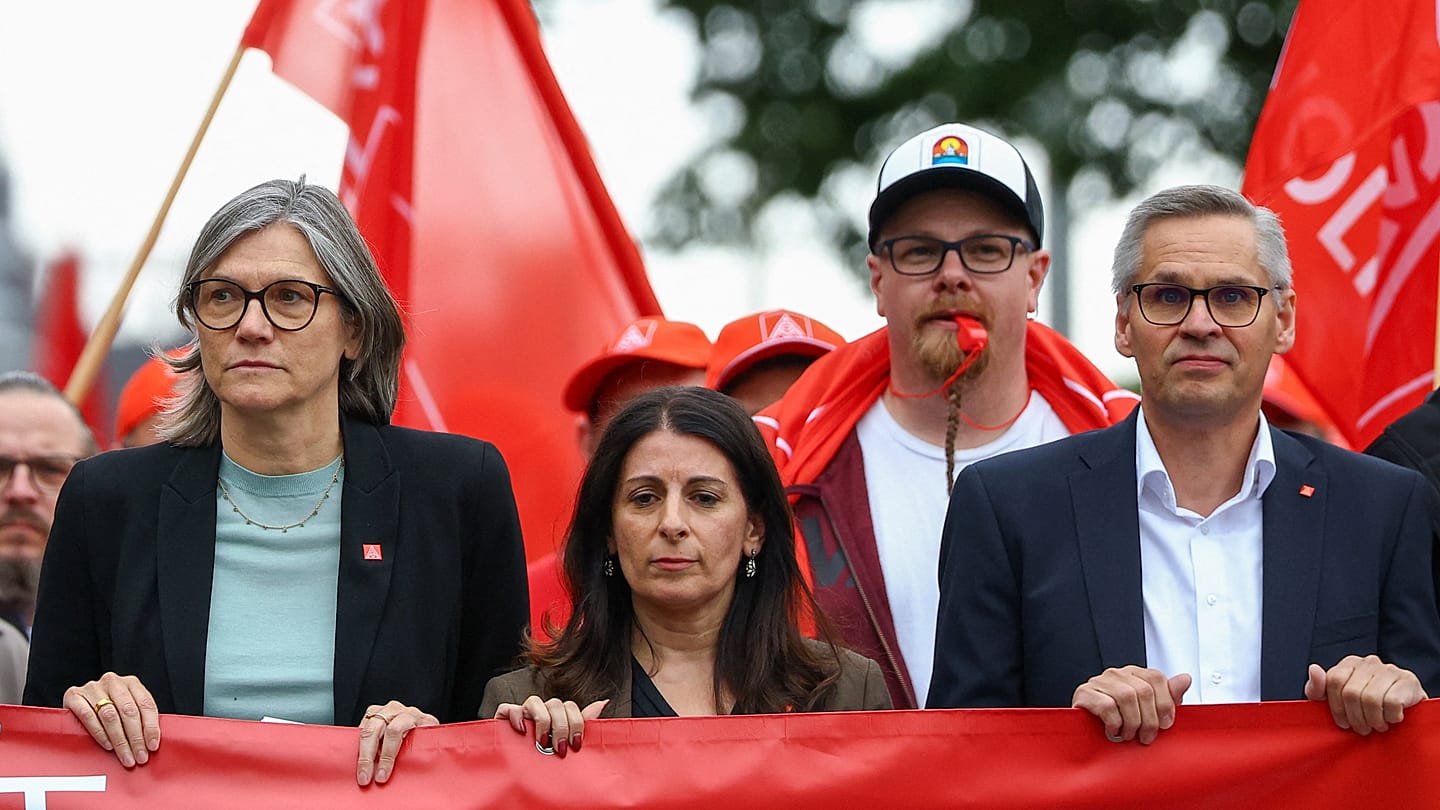
IG Metall and employers in Germany’s metal and electrical industries agreed on a new pay deal Thursday after more than 26 hours of negotiations. The pilot agreement covers Baden-Württemberg and North Rhine-Westphalia; it has not yet been adopted nationwide.
Workers covered by the deal are due a 2% pay rise from May 1, 2027, followed by a further 2.3% increase from April 1, 2028. They will also receive a one-off payment in March 2027 of €150, €300 or €450, depending on their employer’s net return on sales, according to IG Metall.
The agreement runs through November 30, 2028. If regional bargaining committees adopt the pilot deal across Germany, it could cover up to 3.7 million workers in sectors including carmaking, electronics, aerospace and mechanical engineering.
The agreement also establishes a mechanism for companies to seek cost reductions through collective bargaining in return for commitments on investment, products or technology intended to support long-term employment prospects in Germany. IG Metall has recommended the terms for nationwide adoption, but that extension remains pending.
Deal follows warning strikes
The negotiations came after two waves of warning strikes involving more than 956,000 workers, IG Metall said. Walkouts earlier in the week affected Mercedes-Benz and BMW plants. The union had sought a 5% pay increase over one year.
IG Metall president Christiane Benner called the result “a solid agreement in turbulent times.” Gesamtmetall president Udo Dinglreiter described it as a painful compromise on wages and said it was intended to help secure jobs and industrial sites.
The talks took place as Germany’s industrial sector faced pressure, including from Chinese competition in the car industry. The agreement’s staged increases and conditional one-off payment set out the wage terms for covered workers while leaving the wider national rollout to regional adoption.
 Clayton Ward