

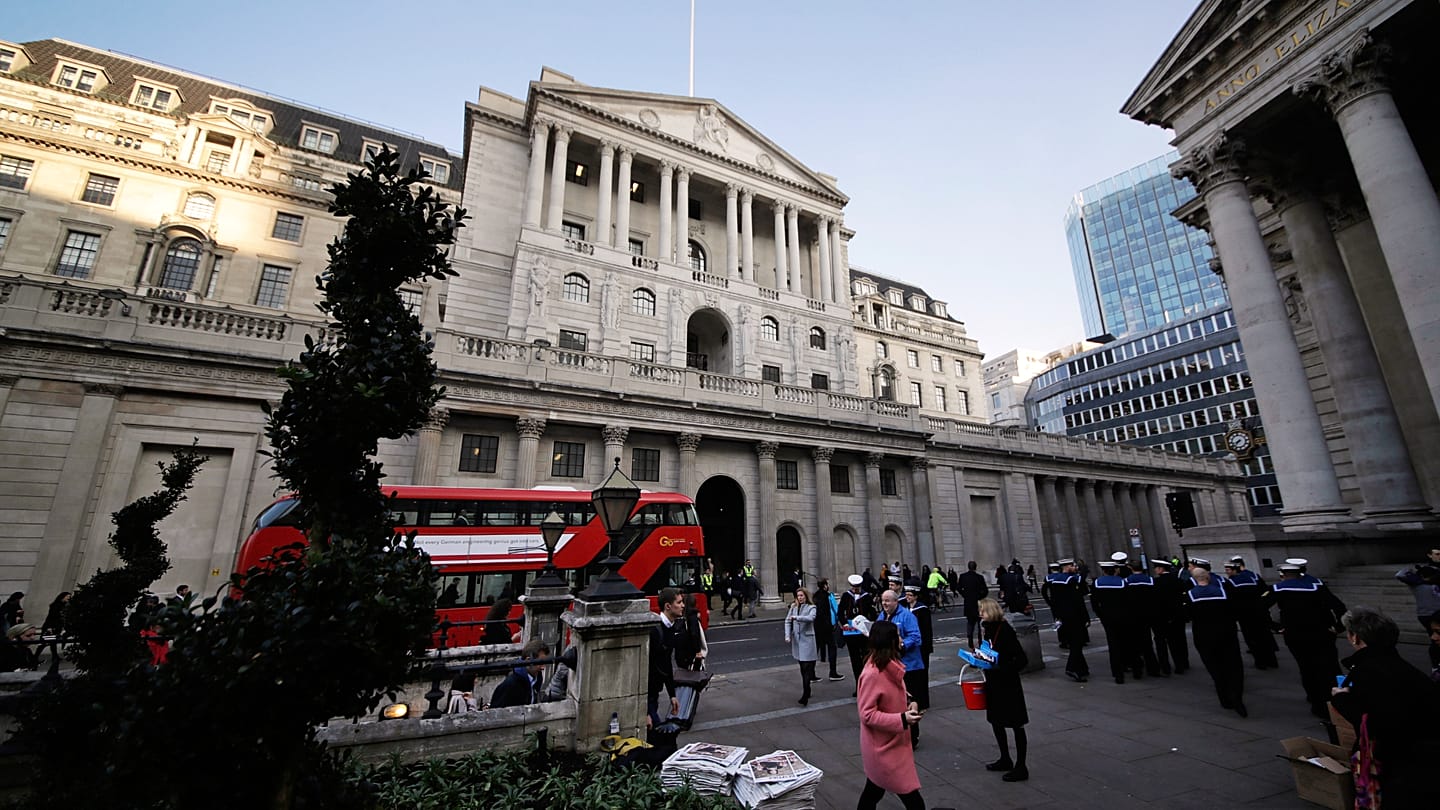
The Bank of England raised its key interest rate to 4% from 3.75% on Thursday, its first increase since August 2023, as policymakers responded to elevated inflation and rising energy costs.
The Monetary Policy Committee approved the quarter-point increase by an 8-1 vote. One member preferred a larger rise of half a percentage point, according to the Bank of England.
<p UK inflation reached 3.5% in September, above the Bank’s 2% target. The Bank said higher fuel costs, linked to the Iran war and disruption around the Strait of Hormuz, had driven much of this year’s increase. It said there was still limited evidence that energy costs were feeding through to other prices and wages.
The Bank warned that inflationary pressures in the pipeline justified raising rates. Its latest projections put inflation at around 5% by the middle of 2027, as higher energy costs pass through to household and business bills. That is a forecast, not an observed inflation rate.
Alongside the inflation outlook, the Bank revised up its growth estimates. It expects the UK economy to expand by 1.6% in 2026 and 1.3% in 2027, compared with its previous forecast of 1.1% for each year.
Governor Andrew Bailey said further increases were possible but not automatic. The committee would assess conditions at each meeting and act as needed to bring inflation sustainably back to its 2% target, he said.
Market interest rates remained above their pre-conflict levels, and benchmark two-year mortgage rates had climbed by nearly half a percentage point since early September. The Bank’s move does not by itself determine how individual lenders adjust mortgage products.
 Clayton Ward