

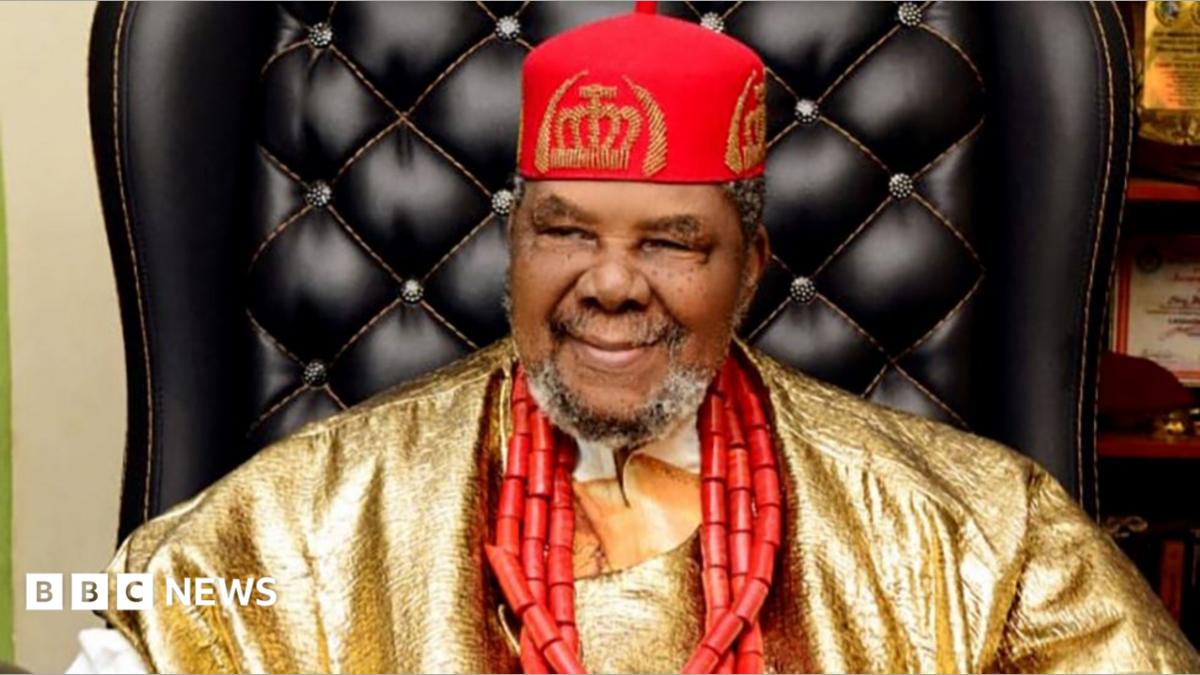
Nigerian actor Pete Edochie, best known for playing Okonkwo in the 1987 television adaptation of Chinua Achebe’s Things Fall Apart, died in Enugu on November 25. He was 79 and had been battling prostate cancer, according to his family.
The death was also acknowledged by Nigeria’s Presidency, which described Edochie as a major figure in the country’s film industry and cultural life. The State House statement singled out his performance as Okonkwo, the proud and troubled warrior whose story unfolds as colonial rule and Christianity reshape his community.
Edochie’s commanding voice and stern screen presence made him one of Nollywood’s most recognizable actors. He often played elders, rulers and powerful men, building a reputation for authority that audiences continued to associate with him long after his earliest roles.
From broadcasting to Nollywood
Born in Zaria on March 7, 1947, Edochie studied journalism and television in the United Kingdom. He joined the Eastern Nigerian Broadcasting Corporation in 1967 and later worked with the pro-separatist Voice of Biafra during the Nigerian civil war. He went on to hold senior broadcasting roles before moving into acting.
His film credits included Igodo, Rituals and Billionaire’s Club. He also appeared in the 2018 romantic comedy Lionheart, Netflix’s first original Nigerian film, and starred in the Ghanaian comedy John and John in 2017. Nigeria awarded him the Member of the Order of the Niger in 2003.
In recent years, clips and stills from Edochie’s films found a new audience as social media memes, often used to convey disapproval or disbelief. His son Leo said the values his father most wanted to pass on were honesty and telling the truth. Two of Edochie’s six children, Yul and Linc, also entered the Nigerian film industry.
Fans and fellow actors paid tribute after his death. Actress Genevieve Nnaji remembered him in a post on X, while Patience Ozokwor, who acted alongside him, recalled him as a wise and generous colleague. BBC reporting also recorded tributes from filmmakers who described his career as an enduring influence on Nigerian cinema.
 Reid Bentley