

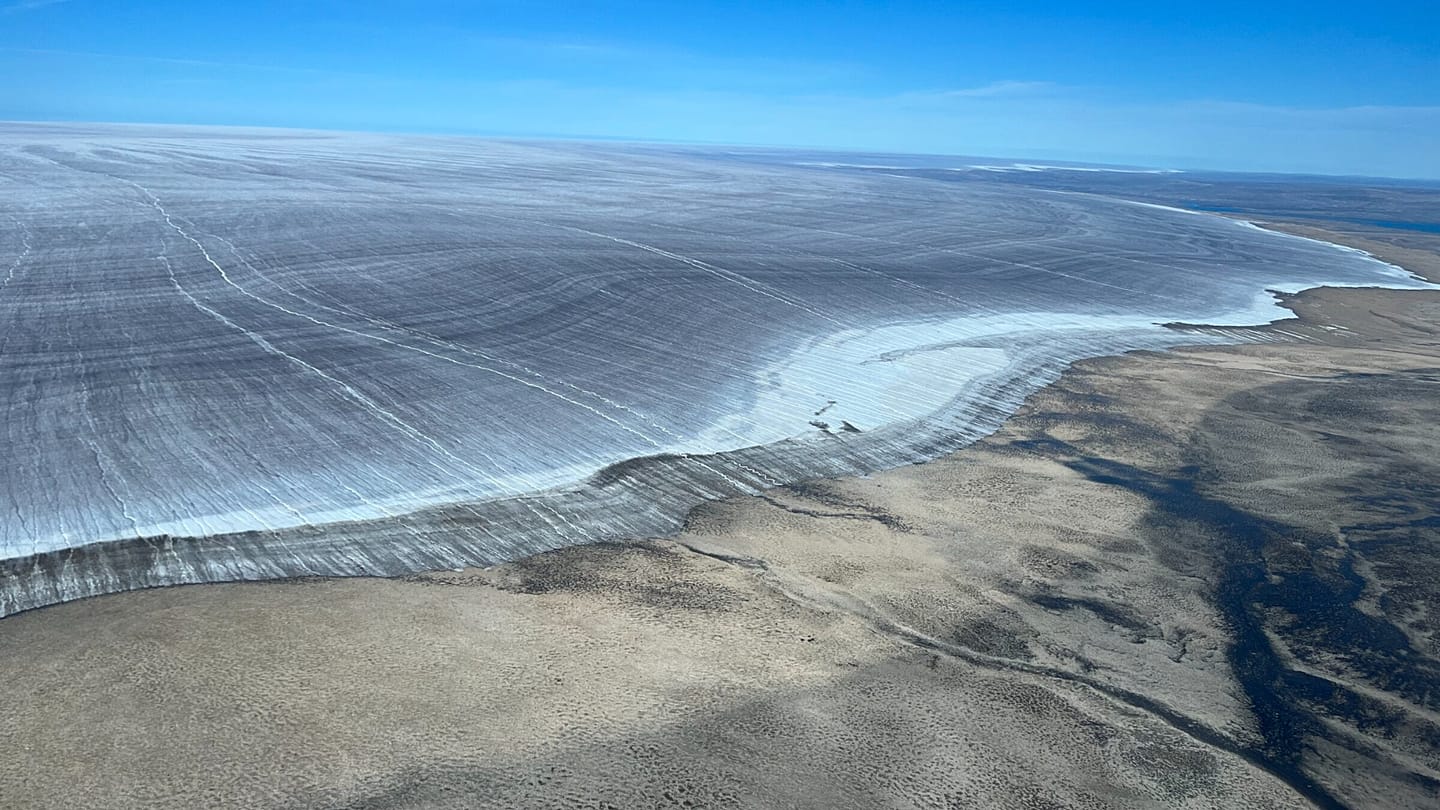
Human-driven warming reversed the growth of the Laurentide Ice Sheet around 1960, after it began expanding again about 2,000 years ago, according to a study of the Barnes Ice Cap in northeastern Canada. The researchers interpret that earlier expansion as the start of a new glacial period, but the finding does not mean a fully developed global ice age had begun.
The study, led by Nicolás Young and published in Science on October 22, reconstructs changes in the ice sheet’s edge using carbon dating of vegetation preserved beneath ice. The Laurentide Ice Sheet once covered large parts of Canada and the northern United States. The Barnes Ice Cap, on Baffin Island, is its last remaining fragment, covering about 6,000 square kilometres. The study’s abstract places the ice sheet’s minimum after about 3,600 years ago and its renewed expansion around 2,000 years ago.
Young and his colleagues argue that the renewed growth should count as the beginning of the next glaciation, rather than waiting for continental ice sheets to become extensive. In technical terms, a glacial period is a colder phase within the longer ice age that Earth is already experiencing. Columbia’s Lamont-Doherty Earth Observatory describes the interpretation and the evidence behind it.
Researchers disagree on what the evidence means
The study’s interpretation is not a settled consensus. Meredith Kelly said the explanation could be correct but called for comparisons with glaciers in other regions. Andrey Ganopolski has argued that models place the next natural glaciation about 50,000 years away and that Barnes’s growth alone does not show that a glacial cycle began and was then halted. Their comments were reported by KVIA.
The ice cap’s growth reversed around 1960 as warmer summers caused it to lose more ice than it gained in winter. The researchers say human-caused warming interrupted that expansion. They also suggest the eventual loss of the remaining ice could affect future glaciation, though the extent of any such effect has not been quantified.
 Clayton Ward