

A mathematical result by physicist Hongsheng Zhang suggests that travel to the past is impossible in a broad class of theoretical universes. The work rules out closed timelike curves in spacetimes with a particular global geometric structure, but does not show whether time travel is possible in our universe.
Zhang, a researcher at the University of Jinan in China, presented the result in a preprint that is awaiting peer review, according to Euronews. Closed timelike curves are paths through spacetime that return to the same place and moment where they began.
The argument relies on the geometry of light. In the spacetimes covered by the theorem, light defines a global ordering through time. Objects moving through spacetime must follow that ordering, preventing them from looping back to an earlier moment.
Two ways the mathematical barrier could fail
The result has limits. Zhang’s argument does not apply if the directions of light twist in a way that prevents the global ordering from forming, or if the overall shape of the universe loops back on itself. Both possibilities appear in theoretical discussions of time travel, including models involving spinning black holes and wormholes.
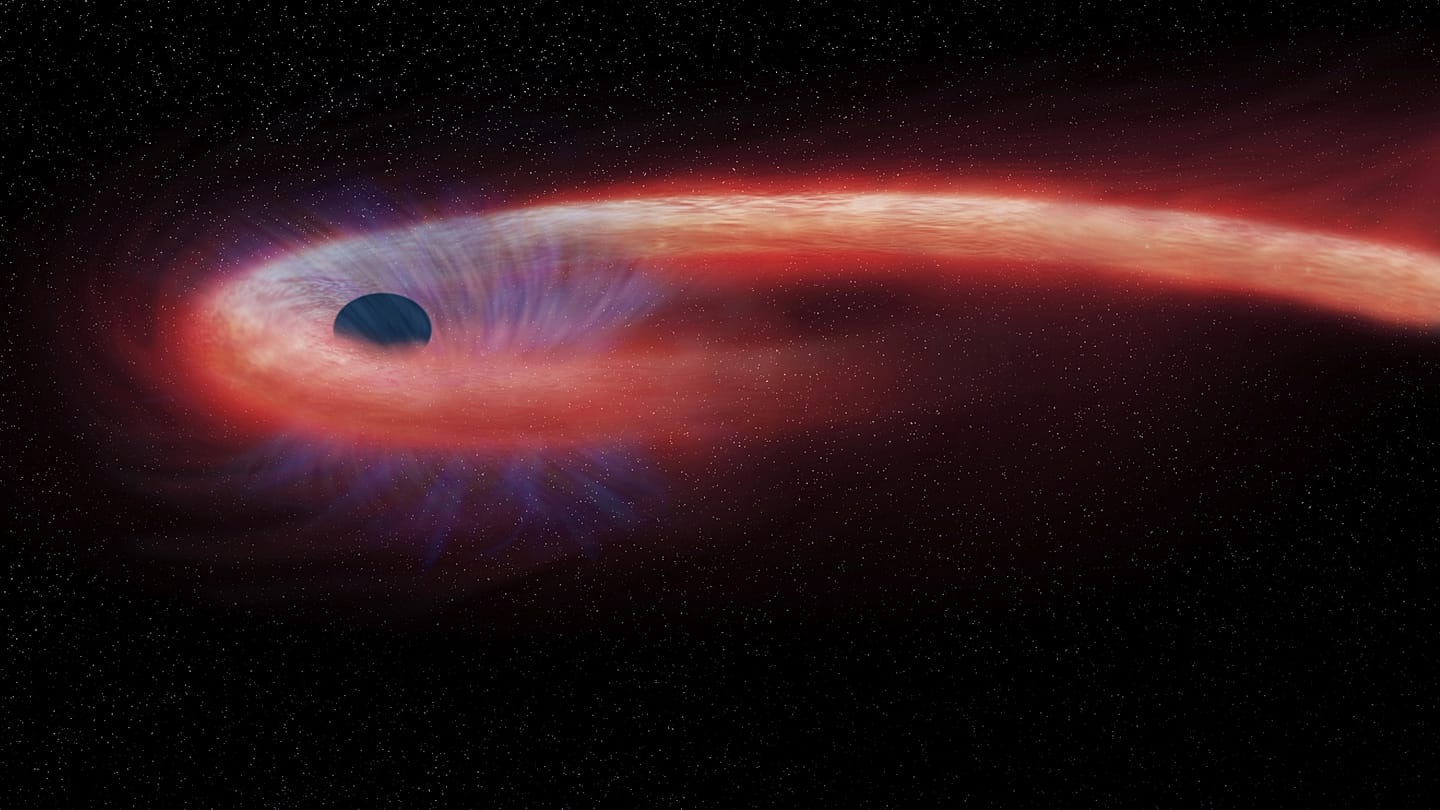
General relativity permits closed timelike curves in some mathematical scenarios, such as near the core of a spinning black hole. Their existence in equations, however, does not establish that nature allows them or that a usable time machine could be built.
Travel into the future is a different matter. Relativity predicts that time passes at different rates depending on speed and gravity. Astronauts aboard the International Space Station return to Earth a few thousandths of a second younger than they otherwise would have been.
 Clayton Ward