

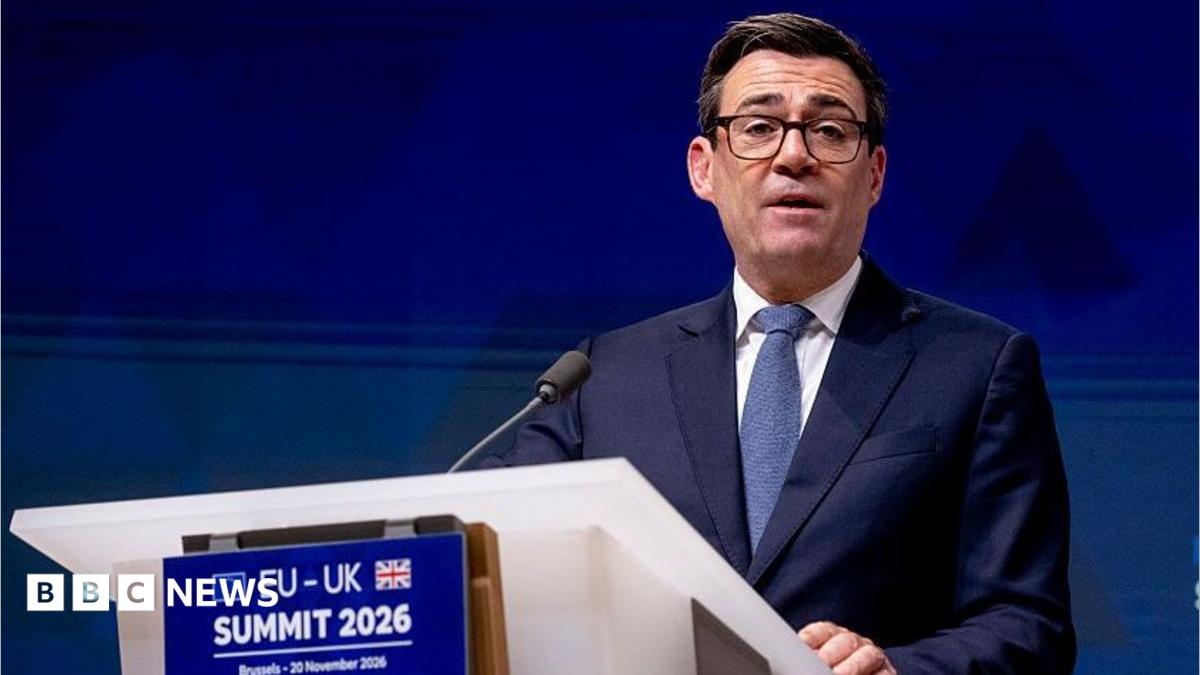
Prime Minister Andy Burnham is due to tell MPs on Monday that a new UK-EU agreement could improve Britain’s economic prospects over the next decade. The package, agreed at a summit in Brussels on 20 November, covers food trade, emissions markets and youth mobility.
The food agreement is intended to reduce checks and paperwork on British exports. It is scheduled to take effect on 1 March 2028, subject to the required procedures, with the UK adopting some EU rules. The two sides also plan to link their emissions trading markets from 1 January 2028, pending legislative and technical steps.
A youth experience scheme would allow up to 100,000 people aged 18 to 31 from each side to travel, work and study in the other for as long as three years. It is due to launch no later than January 2030. The joint statement sets out the agreed areas of cooperation.
Burnham is expected to describe the package as a choice between the existing arrangement and closer cooperation. He has said it could add £17 billion to the British economy. The government’s estimate is for a potential annual GDP impact by 2040, not a guaranteed or immediate gain.
Opposition parties challenge the terms
Conservative leader Kemi Badenoch is expected to argue that British farmers would have to follow rules set in Brussels. Reform UK leader Nigel Farage is also due to oppose closer EU ties, saying they would harm businesses seeking to compete and innovate.
Burnham has ruled out returning to the single market, customs union or freedom of movement before the next general election, in line with Labour’s 2024 manifesto pledge. The prime minister said the UK and EU would begin informal discussions in the coming months about their longer-term relationship, while describing the current package as likely to be the limit of what can be achieved in this Parliament.
BBC reported that Burnham would present the deal to Parliament on Monday. The agreements still require implementation steps before they take effect.
 Reid Bentley
 Nicole French