

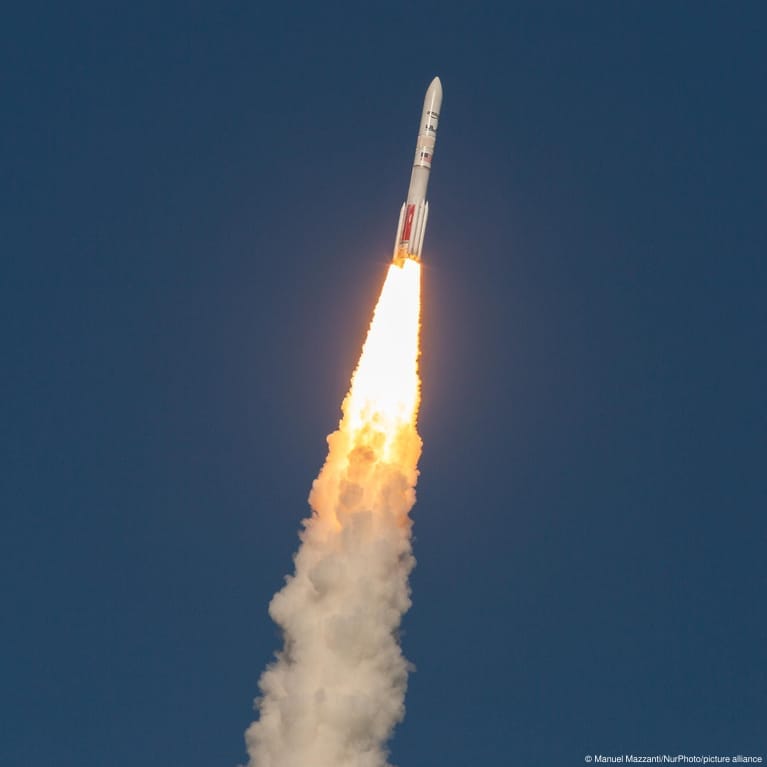
A United Launch Alliance Vulcan rocket suffered an anomaly about 10 minutes after liftoff on Sunday, Nov. 15, and failed to deliver 40 Amazon Leo satellites to orbit, ULA said. The loss marks the first total mission failure in the company’s history.
The rocket launched from Space Launch Complex 41 at Cape Canaveral Space Force Station in Florida. ULA said it had not yet identified what caused the anomaly. “Since the anomaly just occurred, we don’t have any specific data yet to understand what occurred today,” the company said in a statement reported by DW.
Amazon said launch carries risks, particularly on a rocket’s inaugural missions, and described ULA as a trusted partner. The company said it expected ULA to learn from the flight and continue its longer-term plans for Vulcan.
Failure adds uncertainty to Vulcan’s launch schedule
This was Vulcan’s fifth launch since the rocket debuted in 2024 and its first in nine months. Earlier flights had prompted technical investigations into the rocket’s solid rocket boosters and its BE-4 engines, supplied by Blue Origin. The previous booster issues did not prevent those missions from reaching orbit.
The U.S. Space Force had paused national security launches on Vulcan pending an investigation and corrective measures. The Amazon flight was expected to provide additional data before the military decided whether to clear the rocket for those missions. It is not yet clear whether the BE-4 engines were involved in Sunday’s failure.
Before the failed flight, Amazon had launched 398 Leo satellites across 14 missions since 2025, according to figures cited in the report. That was about 12% of the 3,236 satellites the company needs for global coverage. Amazon is building Leo to compete with SpaceX’s Starlink, which has more than 11,000 satellites.
 Reid Bentley