

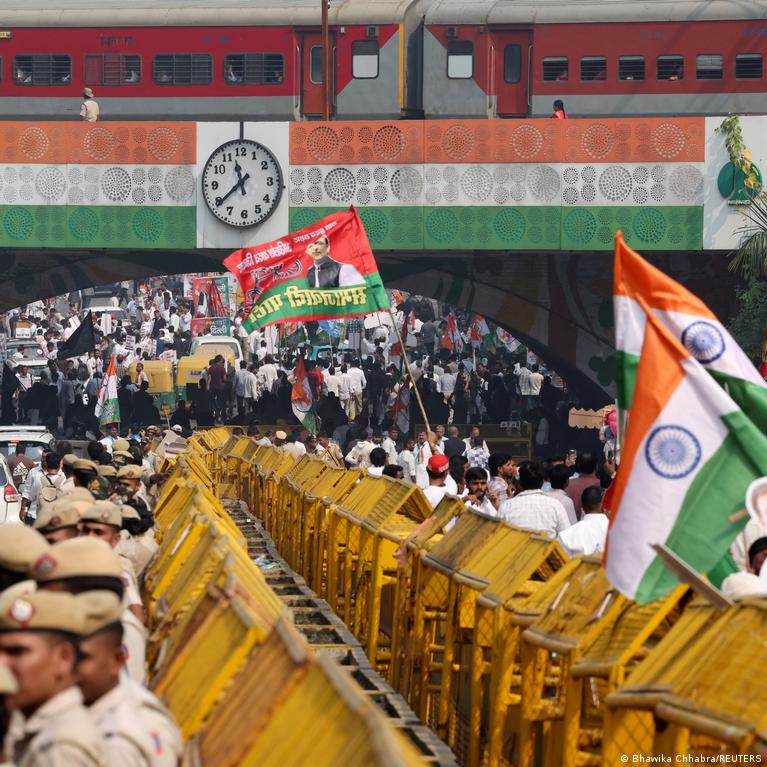
Opposition Leaders Lead Mass Rally in New Delhi
On November 1, 2026, major opposition parties in India convened at Ramlila Maidan in New Delhi to protest against the ongoing nationwide Special Intensive Revision (SIR) of electoral rolls. The protest, spearheaded by the Congress party and its INDIA bloc alliance, called for the resignation of Chief Election Commissioner Gyanesh Kumar, accusing him of overseeing a process that allegedly manipulates voter lists to favor the ruling Bharatiya Janata Party (BJP).
Controversy Over Voter Roll Revisions
The revision exercise has led to the removal of approximately 130 million names from voter lists. Critics argue that a disproportionate number of minority voters have been excluded, raising concerns about the impartiality and integrity of India’s largest democracy’s electoral process. The Election Commission of India maintains that the exercise targets deceased, relocated, and duplicate voters, alongside preventing fraudulent entries, including those of illegal immigrants.
Political Tensions Escalate
Opposition leader Rahul Gandhi and prominent figures from parties such as the Trinamool Congress, Samajwadi Party, and Rashtriya Janata Dal joined the march. Gandhi invoked calls to “Save the Vote, Save the Nation,” urging citizens to participate in the protest. The opposition previously staged a mock parliamentary impeachment session against Commissioner Kumar due to what they claim is the lack of institutional avenues to address these grievances.
Government Response and Counteractions
Union Home Minister Amit Shah condemned the opposition rally, criticizing the choice of date coinciding with the anniversary of the 1984 anti-Sikh riots. He accused the Congress party of exploiting the occasion and dismissed allegations of vote manipulation as baseless. Concurrently, the BJP organized its own rally in West Delhi to honor the riot victims and counter the opposition’s narrative.
Security and Public Impact in the Capital
Authorities deployed around 4,000 security personnel and installed approximately 250 CCTV cameras to monitor the protest at Ramlila Maidan. Traffic restrictions and diversions were implemented in central parts of Delhi to manage the large turnout and ensure public safety. The event marked the first large-scale demonstration at the designated protest site since its announcement last month.
Additional Developments: Pollution Controls in Delhi
On the same day, Delhi introduced rigorous winter pollution control measures to combat seasonal smog. Restrictions include bans on older vehicles registered outside the city, suspension of dust-heavy construction work, increased parking fees, and reduced in-person attendance at offices, aimed at improving air quality from November through February.
 Reid Bentley