

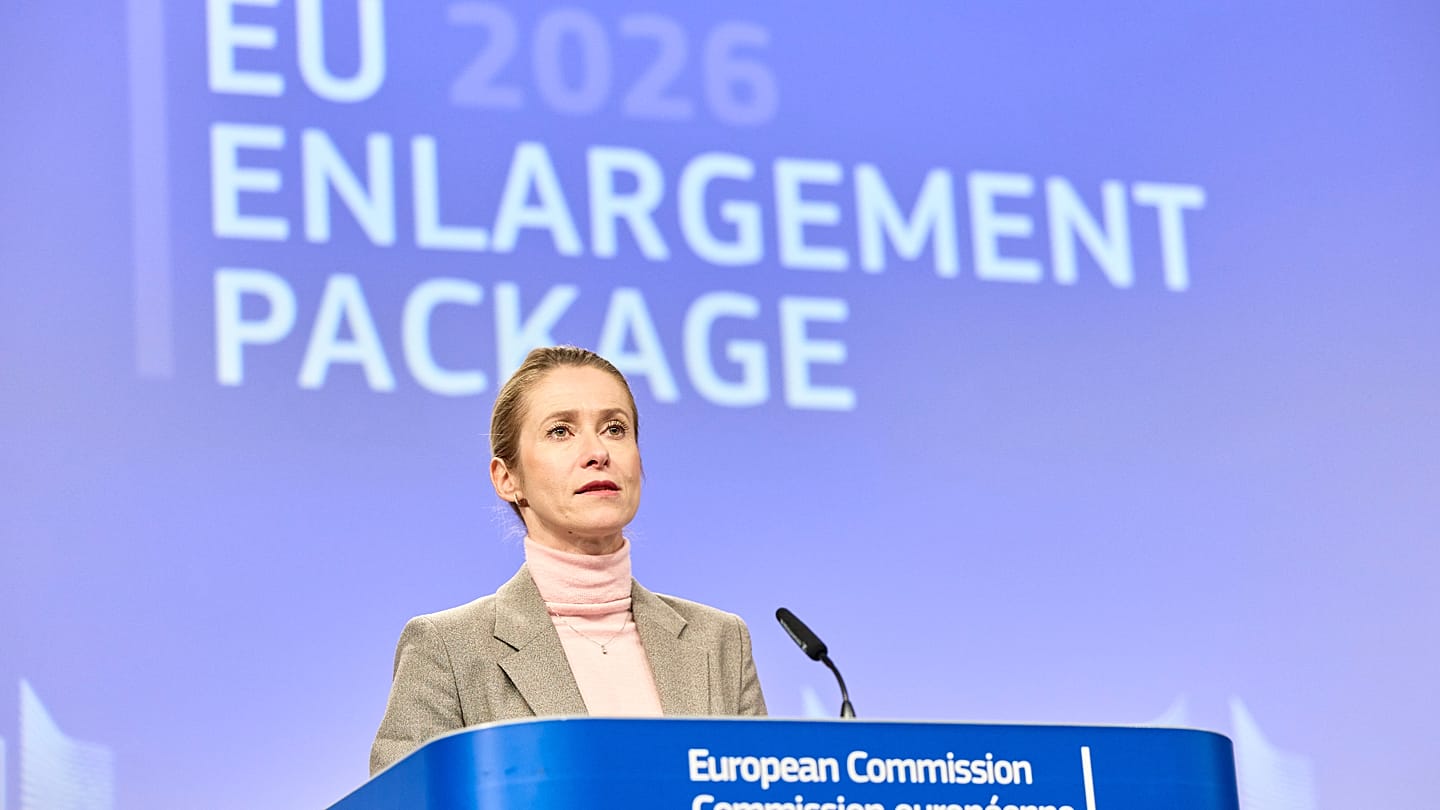
European Union foreign ministers are expected to hold a deeper discussion on Georgia in January 2027, as the bloc considers how to respond to what it describes as further democratic backsliding. EU foreign policy chief Kaja Kallas said on November 4 that possible measures remained under consideration, but no new sanctions have been agreed.
The Council of the EU had already said after its October 12 meeting that ministers would return to the issue in January. Kallas said the discussion would help reconcile different views on how to support Georgian citizens’ aspirations to join the EU while signaling opposition to the government’s policies.
“At the moment, everything is on the table,” Kallas said at a press conference, according to Euronews. She also said it was too early to know whether she would propose sanctions.
EU report cites restrictions on civic space
The European Commission’s 2026 enlargement assessment said Georgia had experienced further democratic backsliding, including restrictions on civic space and a deterioration in fundamental rights. The Commission described the country’s accession process as de facto stalled.
Georgia’s government announced in November 2024 that it would not seek to open EU accession negotiations before the end of 2028. At a European Parliament enlargement summit on November 3, Prime Minister Irakli Kobakhidze said he remained “very committed” to the country’s EU path, but offered no plan to improve relations with Brussels.
The EU has already suspended visa-free travel for Georgian holders of diplomatic, service and official passports. The restriction took effect on March 6, 2026, for 12 months. Any extension would require a further legal act; it is not automatic.
The planned January discussion follows earlier efforts to sanction Georgian officials over the violent repression of peaceful protests. Those proposed measures were blocked by Hungary and Slovakia in 2024. The upcoming talks will consider the EU’s response, but do not amount to a decision to impose new penalties.
The Council of the EU confirmed the planned January discussion, while the Commission’s Georgia assessment details its concerns about the country’s democratic trajectory.
 Clayton Ward